
WHAT YOU NEED TO KNOW
Gathering wild blossoms to craft a rustic wildflower bouquet, make one free of charge, and bring the vibrant energy of nature indoors is a deeply satisfying country tradition.
- Legality and regulations: Always verify local guidelines, as harvesting protected flora can carry fines up to 150,000 euros under environmental protection laws verified by service-public.fr in 2026.
- Best picking times: Collect your stems during the early morning hours when their moisture content is highest to ensure they do not wilt instantly.
- Hydration speed: Place all cut stems into a clean bucket of water within 30 minutes of harvesting to maximize their indoor lifespan.
- Average vase life: Expect a well-prepared wild arrangement to look fresh for 3 to 5 days with proper care.
Your ultimate success relies entirely on immediate water placement and using clean tools to prevent bacterial growth.
Where to Find and Forage Free Wildflowers
You can find abundant wild blooms in common rural spaces, provided you stay observant and respect property boundaries. Finding the right areas ensures you gather a diverse mix of colors and textures without spending a dime.
- Public walking trails: Country paths and the outer edges of forest preserves often feature hardy species like wild daisies, clover, and Queen Anne’s lace.
- Roadside verges: Unsprayed rural ditches scheduled for municipal mowing are excellent spots to harvest wild flowers before they are cut down.
- Your own property: Letting a small corner of your lawn grow wild is the easiest way to gather clover and native grasses without leaving home.
Guidelines for Ethical Wildflower Foraging
Responsible foraging keeps local ecosystems healthy and ensures that wild blooms return to populate the fields next season. You must prioritize conservation over aesthetic choice when gathering wild materials.
- The 1-in-20 rule: Only pick a single stem if you can see at least 20 other flowers of the exact same species growing nearby.
- Leave roots intact: Use sharp shears instead of pulling or tearing stems, which damages the root system and prevents future growth.
- Respect farmland boundaries: Avoid trespassing on active pastures or crop fields, a practice strictly monitored by local Chambres d’agriculture to prevent crop contamination.
- Protect local pollinators: Never harvest more than 10 percent of any single flower patch to leave enough food for bees and butterflies.
What You Need to Make Your Bouquet
Assembling a beautiful diy wildflower arrangement does not require professional florist equipment or expensive materials. You only need a few basic, practical items that are likely already sitting in your country barn or kitchen pantry.
- A clean plastic bucket: Fill this halfway with cool water to carry with you during your harvest walk.
- Sharp bypass pruners: Clean blades make swift, angled cuts that allow the stems to drink water efficiently.
- A rustic container: A simple glass mason jar or a vintage ceramic pitcher works perfectly for this style of arrangement.
- Fresh tap water: Keep the water cool and clear, avoiding any harsh chemical additives.
Wildflower Bouquet: Make One Free with Our Step-by-Step Guide
Creating your custom foraged flower bouquet is a simple, creative process that relies on careful stem preparation and relaxed positioning. Following a structured order ensures your arrangement looks naturally wild yet stays structurally sound.
Step 1: Clean and Prep Your Foraged Stems
Strip all leaves, side shoots, and buds from the bottom half of every stem before you begin designing. Leaves left below the water line will rot quickly, creating bacteria that block the vascular pathways of your flowers. Rinse the remaining stems in cool water to wash away loose dirt, pollen, and any small insects.
Step 2: Design and Arrange Your Bouquet
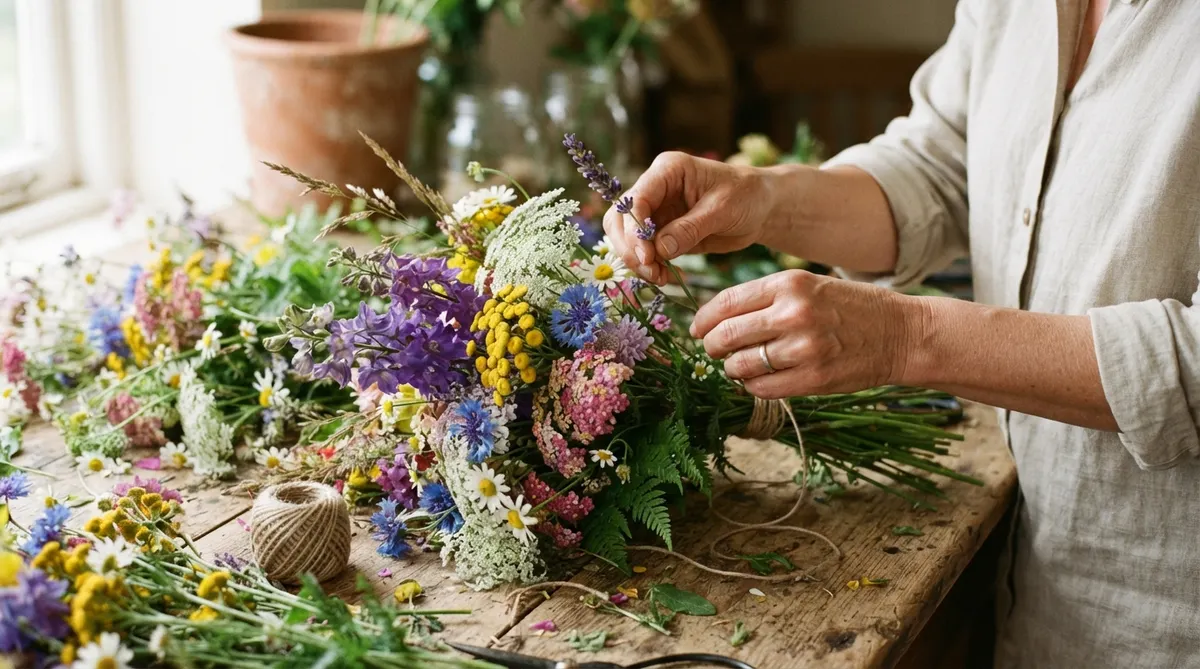
Construct your bouquet from the center outward by grouping similar species together for visual impact. Start with your largest focal flowers, then add delicate accent blossoms, and finish by tucking in tall wild grasses around the perimeter. Cross the stems in a natural spiral pattern to give the bouquet its signature unstructured, field-grown look.
Step 3: Secure and Trim the Stems
Hold the completed bundle firmly and trim all stems at a sharp 45-degree angle so they sit evenly in your vase. Cutting at an angle prevents the stem bottoms from sealing against the flat glass base, which would restrict water intake. Tie the bundle loosely with a piece of natural jute twine if you want to maintain the exact shape when placing it into your water-filled jar.
Tips to Keep Your Wildflower Bouquet Fresh
Wildflowers are naturally more delicate than cultivated store varieties, requiring consistent attention to stay vibrant indoors. Simple daily maintenance will prolong their beauty and prevent premature drooping.
- Daily water changes: Empty the vase entirely and refill it with clean, cool water every 24 hours to stop bacterial build-up.
- Re-trim the stems: Snip 5 to 10 millimeters off the bottom of the stems every two days to open fresh pathways for hydration.
- Cool placement: Position your vase in a shaded area away from direct sunlight, drafty woodstoves, and ripening fruit.
- Quick pruning: Remove any individual blooms that begin to fade or drop petals to protect the remaining healthy flowers.