
WHAT YOU NEED TO KNOW
Establishing a successful wildflower plot requires total elimination of existing weeds and grass before sowing, rather than simply scattering seed over untreated turf.
- Seed application rate: 4 ounces per 2,500 square feet or 4 pounds per acre for loose meadow blends.
- Germination timeline: Expect sprouts in 10 to 21 days when kept constantly moist.
- Sunlight requirement: Minimum of 6 hours of direct sun daily for traditional native species.
- Material cost: $25 to $60 per 1,000 square feet for high-grade regional seed.
Soil preparation quality dictates 80% of your long-term success, as latent weed seeds in uncleaned ground will quickly choke out young flowering sprouts.
Planning Your Wildflower Meadow: Timing and Location
To establish a flowering plot that lasts, you must evaluate sun exposure and seasonal timing before opening a single seed packet. Most meadow species require full sunlight, meaning at least 6 hours of direct sun per day. If your site gets less light, select shade-tolerant varieties like black-eyed Susan (Rudbeckia hirta) or foxglove (Digitalis purpurea).
Timing your planting depends on your local climate and weed pressure. Spring planting works well in colder zones once the soil warms to roughly 55°F (13°C), giving seedlings a full season to root. Alternatively, late autumn planting (dormant seeding) allows natural cold stratification over winter, encouraging early spring germination before spring weeds take root.
Choosing the Right Wildflower Seeds
Selecting quality seed determines whether your meadow becomes a self-sustaining landscape feature or a patchy weed bed. High-grade mixtures contain pure seed without excessive fillers like vermiculite or grain hulls.
Native Mixes vs. Regional Blends
Commercial flower mixes sold at big-box stores frequently contain non-native annuals that look good for one summer but fail to return. When buying native wildflower seeds for homestead applications, look for regional mixes specifically tailored to your state or climate zone.
According to data from the USDA Natural Resources Conservation Service, native perennial species form deep root structures up to 15 feet deep. These deep roots make established native plots resilient against severe summer droughts and eliminate the need for routine summer irrigation.
Selecting Seeds to Attract Pollinators and Wildlife
If your goal is planting bee friendly meadow space, select a balanced combination of early, mid, and late-season bloomers. This staggered schedule provides nectar from spring through late autumn.
- Spring bloomers: Lanceleaf coreopsis, golden Alexander, eastern red columbine.
- Summer bloomers: Purple coneflower, blanket flower, butterfly milkweed, black-eyed Susan.
- Fall bloomers: New England aster, aromatic aster, Joe-Pye weed, goldenrod.
Site Preparation: Cleaning and Soil Prep
Skipping proper ground preparation is the single biggest cause of meadow failure. Wildflower seeds cannot compete with established perennial turf grasses like fescue or Bermuda grass.
Removing Existing Weeds and Turf Grass
Clear the soil completely down to bare dirt using one of two field-tested methods depending on your timeframe:
- Manual removal or sod cutting: Strip off the top layer of sod using a square spade or motorized sod cutter. This works best for smaller plots under 1,000 square feet.
- Solarization: Mow the target area as low as possible, saturate the ground with water, and cover tightly with clear plastic sheeting for 6 to 8 weeks during mid-summer. The trapped heat bakes latent weed seeds and roots near the surface.
Preparing Soil for Optimal Germination
Once cleared, till the soil shallowly to a depth of no more than 3 inches. Deep tilling brings dormant weed seeds to the surface, causing unwanted competition later. Rake the soil smooth, leaving tiny grooves that will hold the flower seeds in place.
Do not add synthetic nitrogen fertilizers to meadow beds. Rich soil encourages fast-growing invasive weeds and heavy foliage growth at the expense of flower blossoms. If you use well water to irrigate during prep, confirm your water source is working reliably. Learn more about watering vegetables with well water to avoid mineral buildup issues on exposed soils.
Step-by-Step Guide on How to Plant a Wildflower Garden
Once your ground is clear and lightly grooved, follow these standard steps on how to plant a wildflower garden efficiently:
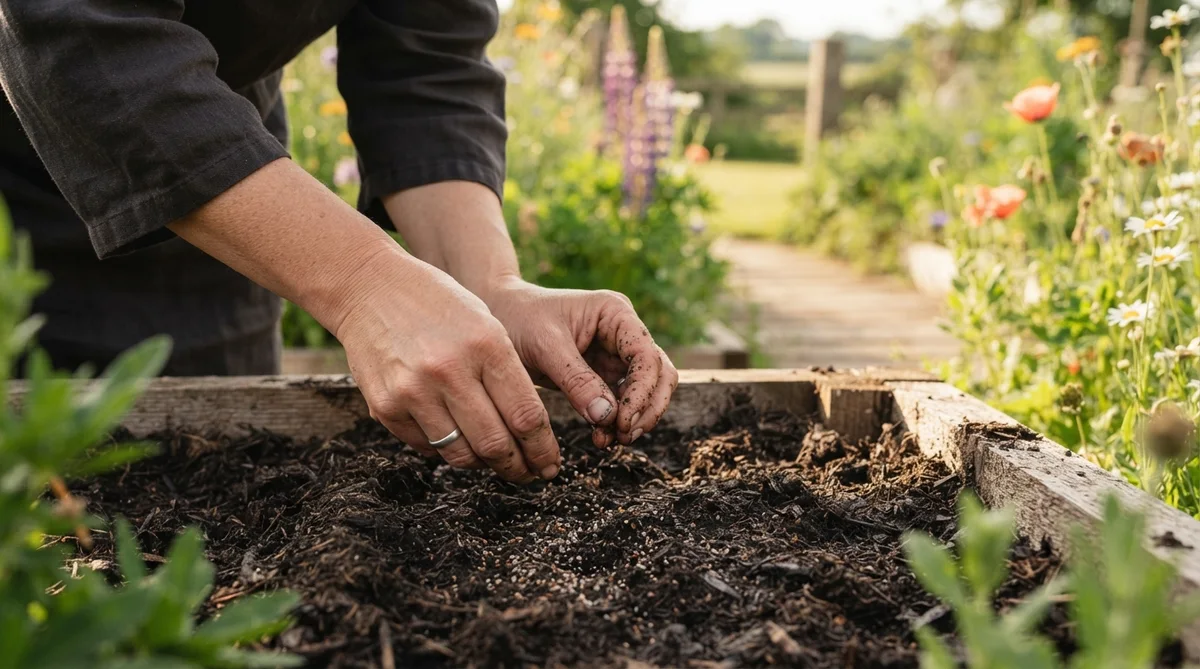
- Mix seeds with sand: Combine your seed blend with clean, dry builder’s sand at a ratio of 1 part seed to 4 parts sand. The light color of the sand shows you where you have already sown, preventing uneven clusters.
- Broadcast evenly: Divide your seed-sand mix into two equal halves. Walk north-to-south scattering the first half, then walk east-to-west scattering the second half across the plot.
- Ensure soil contact: Walk over the seeded area or use a water-filled lawn roller to press seeds into the dirt. Most native seeds require light to germinate, so do not bury them with dirt.
- Apply light mulch: Spread a thin layer of weed-free straw across the plot. You should still see about 50% of the bare soil through the straw layer.
Watering and Initial Care
Keep the top inch of soil consistently moist for the first 3 to 4 weeks after sowing. During dry spring spells, apply a light water spray for 10 to 15 minutes twice daily, early in the morning and late in the afternoon.
Once seedlings reach 2 to 3 inches in height, scale back watering to once per week if rainfall is lacking. Homesteaders relying on private wells should review how well water works to plan pump runtime and prevent pressure tank wear during daily irrigation cycles.
Long-Term Wildflower Meadow Maintenance
While wildflower meadows serve as excellent low maintenance lawn alternatives, they are not zero-maintenance landscapes. A small amount of seasonal labor prevents brush and trees from taking over.
Controlling Weeds in Established Plots
During the first growing season, weeds will inevitably sprout alongside your wildflowers. Walk the plot every two weeks to hand-pull opportunistic weeds like thistle, dandelion, and crabgrass before they produce seeds.
If weeds overrun a section during year one, set your mower deck to 6 or 8 inches high. Mow over the bed before the tall weeds set seed, cutting them back without injuring the lower-growing native flower basal rosettes.
Fall Mowing and Overseeding
Maintain your established meadow with one mandatory mowing per year in late autumn or early spring:
- Mow the entire area down to a height of 4 to 6 inches after all plants have dropped their seed heads.
- Leave the clippings on the ground for 2 to 3 weeks so dried seed heads fall into the soil naturally.
- Overseed bare spots in autumn with additional perennial seeds to maintain plot density year after year.
During mid-summer, you can cut mature stems to assemble a fresh wildflower bouquet without damaging the overall health of the meadow root system.
Frequently Asked Questions
- Do wildflower gardens come back every year?
Yes, if you plant a mixture composed primarily of perennial native species and self-seeding annuals. Purely annual mixes require reseeding every spring. - Can I plant wildflowers directly over existing grass?
No. Grass roots will choke out sprouting wildflower seeds long before they can establish deep roots. Grass must be killed or stripped away first. - How long does it take for a wildflower garden to bloom?
Annual species bloom within 60 to 90 days of sowing. Perennial native species spend their first year building root systems and usually deliver full flowering displays starting in their second year. - How much seed do I need for my plot?
Standard application rules call for roughly 1 ounce per 600 square feet or 4 to 5 pounds per acre for full, dense coverage.