
THE BOTTOM LINE
Understanding how do reverse osmosis systems work is the key to securing clean drinking water, especially if your rural home relies on well water containing heavy metals or agricultural runoff. These multi-stage systems use mechanical pressure to force water through a microscopic membrane, stripping away up to 99% of dissolved solids while flushing impurities down the drain.
- RO systems filter down to 0.001 microns, removing lead, arsenic, nitrates, and PFAS.
- Standard units generate 3 to 10 gallons of wastewater per gallon of purified water, but modern WaterSense certified models reduce this to 2.3 gallons or less.
- Expect to spend $150 to $600 for an under-sink system in 2026, with annual filter replacement costs running between $40 and $120.
Your success with this technology depends on your incoming water pressure, your tolerance for water waste, and your local regulations regarding wastewater disposal.
What is Reverse Osmosis (RO)?
To understand what is an ro system, you must first look at how nature manages liquid solutions. In everyday settings, water naturally moves to balance out chemical concentrations, a process that can leave you with inconsistent water quality at your tap.
A reverse osmosis filtration system reverses this natural cycle by using mechanical force. It acts as an ultra-fine barrier, separating pure water from dissolved minerals, heavy metals, and chemical residues at the molecular level.
Osmosis vs. Reverse Osmosis
In natural osmosis, a weaker saline solution will naturally migrate toward a stronger saline solution. For example, if a semi-permeable membrane separates fresh water from salty water, the fresh water flows toward the salty side to balance the concentration.
Reverse osmosis does exactly the opposite. By applying high pressure to the concentrated, dirty side of the water, we force water molecules through the membrane in reverse. The membrane traps the dissolved solids on one side and allows only pure, clean water to pass through to the other side.
How Do Reverse Osmosis Systems Work in Practice?
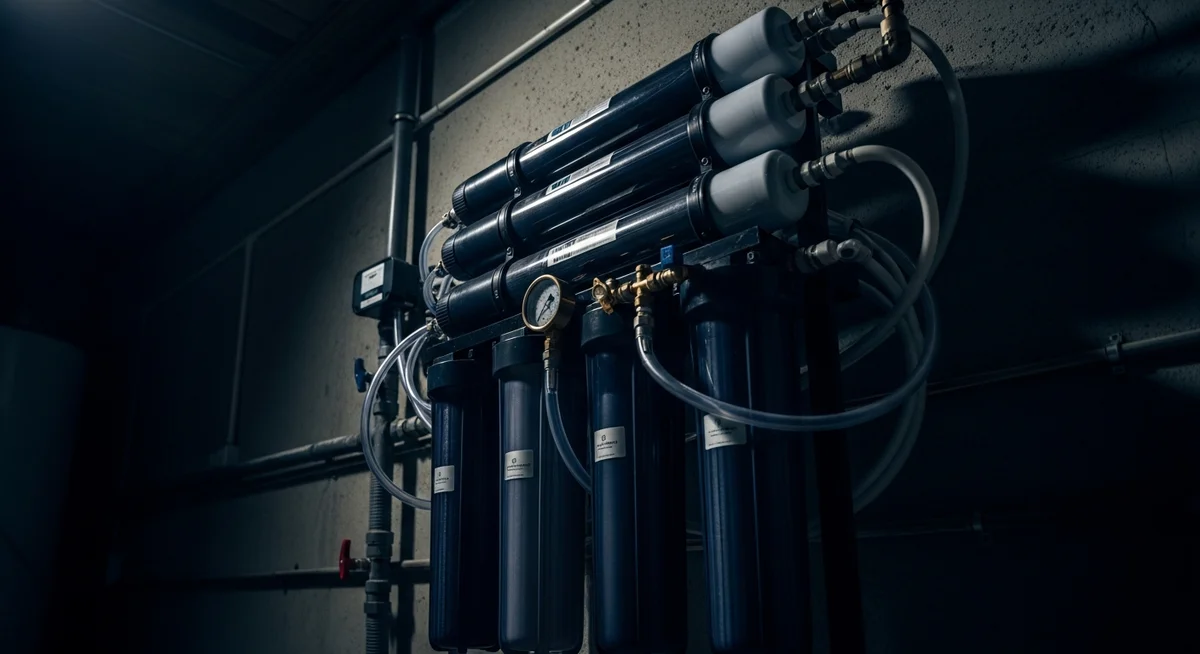
A residential RO setup does not rely on a single filter membrane alone. Raw water from a well or municipal line carries sediment and chemicals that would quickly clog or destroy the delicate main membrane. The entire process requires a sequential, multi-stage path to clean your water safely and efficiently.
Step 1: Pre-Filtration (Sediment and Carbon Filters)
Before water ever touches the main RO membrane, it must pass through pre-filters to remove large physical particles and harsh chemicals. This stage is critical because chlorine and sediment can permanently degrade the system within weeks.
- Sediment filter: Captures dirt, rust, silt, and sand particles larger than 5 microns to prevent physical clogging.
- Pre-carbon filter: Adsorbs chlorine, chloramines, volatile organic compounds (VOCs), and pesticides that alter water taste and damage membranes.
- Secondary carbon block: Provides a second pass to catch remaining chemical residues and fine suspended particles.
Step 2: The Semi-Permeable Reverse Osmosis Membrane
Once pre-filtered, the water is forced under pressure into the RO membrane housing. This membrane is a synthetic plastic film with pores measuring roughly 0.001 microns in size. For comparison, a single strand of human hair is about 70 microns wide.
Under pressure, pure water molecules squeeze through these microscopic pores. Dissolved salts, heavy metals, and organic compounds are too large to pass and remain trapped on the incoming side of the membrane.
Step 3: Wastewater Discharge and Storage
Unlike standard charcoal filters that store dirt inside the cartridge, an RO system self-cleans. The system splits the water into two streams: the purified water (permeate) and the wastewater carrying the rejected contaminants (concentrate or brine). This concentrate stream is constantly flushed out to your drain line to keep the membrane clean.
Because filtration through the membrane is a slow, drop-by-drop process, the purified water is sent directly into a pressurized steel storage tank. This tank, which typically holds 2 to 5 gallons of water, ensures you have immediate flow when you open your dedicated drinking water faucet.
Step 4: Post-Filtration (Polishing and Remineralization)
When you turn on the faucet, water leaves the storage tank and passes through one final post-carbon filter. Often called a polishing filter, this final stage removes any lingering tastes or odors acquired while sitting in the rubber bladder of the storage tank.
Some premium systems also pass the water through a remineralization cartridge at this stage. This adds controlled amounts of calcium and magnesium back into the water, raising the pH level from slightly acidic to neutral and giving the water a more natural, refreshing taste.
What Contaminants Does Reverse Osmosis Remove?
An RO system offers some of the most comprehensive contaminant reduction available for residential properties. According to the US EPA (Environmental Protection Agency) standards updated for 2026, certified reverse osmosis systems are highly effective at reducing both aesthetic issues and serious chemical health hazards.
- Heavy metals: Eliminates up to 99% of lead, arsenic, chromium, copper, and mercury.
- Dissolved salts: Strips out sodium, chloride, fluorides, and sulfates, which is essential for brackish well water.
- Agricultural pollutants: Filters out nitrates, phosphorus, and common herbicides run off from nearby farm fields.
- Microbial threats: Blocks bacteria, viruses, and parasites like Giardia and Cryptosporidium.
- Emerging chemicals: Effectively reduces synthetic chemicals, including PFAS, microplastics, and pharmaceutical residues.
The Pros and Cons of Reverse Osmosis Systems
Every water treatment technology involves compromises. While RO provides exceptionally pure water, it also consumes water and requires a disciplined approach to maintenance.
| System Feature | Key Advantages (Pros) | Key Drawbacks (Cons) |
|---|---|---|
| Water Purity | Removes up to 99% of all dissolved solids, heavy metals, and microbes. | Strips out healthy minerals, which can make water slightly acidic unless remineralized. |
| Water Efficiency | Consistently delivers high-quality drinking water on demand. | Generates wastewater that goes down the drain during the filtration process. |
| Installation and Space | Under-sink models fit neatly inside standard kitchen cabinets. | Requires drilling a hole in your countertop and tapping into your drain pipes. |
Key Benefits of RO Systems
For rural properties reliant on shallow wells, an RO system acts as an invaluable safety shield. The French National Agency for Food, Environmental and Occupational Health Safety (ANSES) highlights that private wells are highly vulnerable to seasonal bacterial spikes and agricultural chemical runoff. Installing an RO unit ensures your family is not drinking pesticides or high levels of natural arsenic.
These systems also save money over time compared to purchasing bottled water. You will no longer need to haul heavy plastic jugs from the store, and you can rest easy knowing your coffee, tea, and cooking water are free of chlorine and limescale.
Primary Drawbacks and Wastewater Considerations
The primary concern with how does a reverse osmosis filtration system work is its inherent water waste. Traditional RO units can send up to 10 gallons of water down the drain for every single gallon of pure water they produce. If your home uses a septic system, this constant discharge of wastewater must be carefully managed.
In France, the local SPANC (Service Public d’Assainissement Non Collectif) regulates individual sanitation systems and may raise concerns if excessive RO waste overloads a small septic tank. To mitigate this risk in 2026, always look for high-efficiency systems or WaterSense labeled models that utilize automatic shut-off valves and permeate pumps to reduce waste by up to 80%.
Types of RO Systems: Point-of-Use vs. Point-of-Entry
Before purchasing, you must decide whether you want to treat water at a single kitchen faucet or clean all the water entering your entire property.
Point-of-Use (POU) Under-Sink and Countertop Systems
Point-of-use systems are installed directly where you drink water, typically under the kitchen sink or as a standalone countertop appliance. These units are highly popular because they are affordable, costing between $150 and $600 in 2026. They only treat the water you actually consume, which minimizes overall water waste and septic load.
A handy homeowner can easily install an under-sink POU system in an afternoon using basic tools. The process involves mounting the faucet, tapping into the cold-water line under the sink, and connecting the waste line to the sink drain pipe.
Point-of-Entry (POE) Whole-House Systems
Point-of-entry systems treat all the water entering your home, protecting your plumbing, showers, and appliances from heavy minerals and contaminants. These systems are massive, requiring dedicated utility space, large atmospheric storage tanks, and powerful booster pumps to maintain household water pressure.
Whole-house systems are far more expensive, with hardware costs ranging from $1,500 to $5,000 in 2026, and professional installation running an additional $500 to $1,500. You should always hire a certified plumber to install a POE system, as it requires cutting into your main water line, balancing flow rates, and ensuring proper backflow prevention.
How to Maintain a Reverse Osmosis System
An RO system is not a set-it-and-forget-it appliance. Neglecting maintenance will lead to biological growth inside the storage tank, ruptured membranes, and a complete loss of purification efficiency.
- Replace pre-filters every 6 to 12 months: Swap out sediment and carbon pre-filters on schedule to prevent chlorine from reaching and melting your expensive RO membrane.
- Sanitize the system annually: Drain the storage tank, remove the filters, and run a safe sanitizing solution through the housings to kill any lingering bacteria.
- Monitor the RO membrane every 2 to 5 years: Use a simple, handheld TDS (Total Dissolved Solids) meter to measure your tap water; replace the membrane when the filtration rate drops below 85% efficiency.
- Check tank air pressure yearly: When the storage tank is completely empty of water, use a bicycle tire gauge to verify that the internal air bladder sits between 5 and 8 PSI.