
WHAT YOU NEED TO KNOW
Providing clean water for farm animals directly drives feed intake, daily weight gain, and milk production while preventing toxic cyanobacteria and bacterial outbreaks across your herd.
- Adult cattle require 38 to 75 liters (10 to 20 gallons) of clean water every day depending on diet, heat, and production stage.
- Water troughs placed 45 meters (150 feet) away from feeding bunks reduce feed contamination and organic sludge buildup.
- Pre-filtration down to 20 to 50 microns removes suspended sediments before chemical dosing or UV disinfection systems.
- Annual lab testing for total dissolved solids (TDS), nitrates, and coliform bacteria costs between $80 and $180.
High environmental temperatures rapidly accelerate algae growth and bacterial colonization, requiring strict seasonal maintenance schedules.
Why Clean Water for Farm Animals Is Essential
Water is the primary driver of digestion, nutrient transport, and thermoregulation in farm animals. When stock drinking water is foul, animals restrict their intake, leading directly to reduced feed intake and drops in meat or milk yields. According to data from the Chambres d’agriculture, clean drinking water directly correlates with optimal rumen efficiency and lower veterinary intervention rates.
Here is why maintaining water quality is non-negotiable for stock performance:
- Digestion and Feed Efficiency: Rumen microbes require high liquid turnover to process dry matter efficiently.
- Pathogen Prevention: Contaminated stock tanks harbor E. coli, Salmonella, and Leptospira, which jump quickly between animals.
- Toxin Mitigation: Stagnant water exposed to sunlight promotes blue-green algae (cyanobacteria), which produces neurotoxins and hepatotoxins capable of killing livestock within hours.
- Milk and Weight Production: Milk consists of over 87% water; even a 10% reduction in water consumption drops milk yield noticeably.
Common Indicators of Contaminated Water
Detecting water degradation early stops herd-wide health issues before clinical symptoms appear. Animals often refuse water before humans notice visual changes, but physical signs accumulate quickly in poorly managed systems.
Watch for these specific signs of contamination in your drinking tanks and lines:
- Visual Turbidity and Discoloration: Brown, red, or greenish hues indicate heavy sediment, iron precipitation, or active algae blooms.
- Foul Odors: Rotten egg smells signify hydrogen sulfide gas, while earthy or musty odors point to decaying organic matter and bacterial buildup.
- Slimy Internal Surfaces: A slippery coating inside stock tanks or piping signals active bacterial biofilm formation.
- Animal Behavior Shifts: Cattle sniffing water repeatedly, crowding troughs without drinking, or seeking mud puddles indicates unpalatable stock tank water.
If you notice heavy rust stains or orange sludge in your supply, learning how to remove iron from well water will protect both your equipment and your animals’ hydration rates.
Water Filtration and Treatment Methods for Livestock
Selecting the right livestock water filtration equipment depends on your source water parameters, herd size, and system pressure. Well water and surface ponds require distinct treatment trains to ensure total biosecurity.
| Treatment Type | Target Contaminants | Average Cost Range | Ideal Application |
|---|---|---|---|
| Sediment Cartridges | Sand, silt, macro-rust | $40 to $150 | Pre-filtration for all trough lines |
| Proportional Injectors | Bacteria, viruses, biofilm | $250 to $600 | Inline sanitization for deep wells |
| UV Disinfection | E. coli, coliforms, pathogens | $500 to $1,400 | Enclosed water lines and dairy parlors |
| Media Oxidizers | Iron, manganese, hydrogen sulfide | $800 to $2,200 | High-mineral rural groundwater |
Mechanical and Chemical Filtration Systems
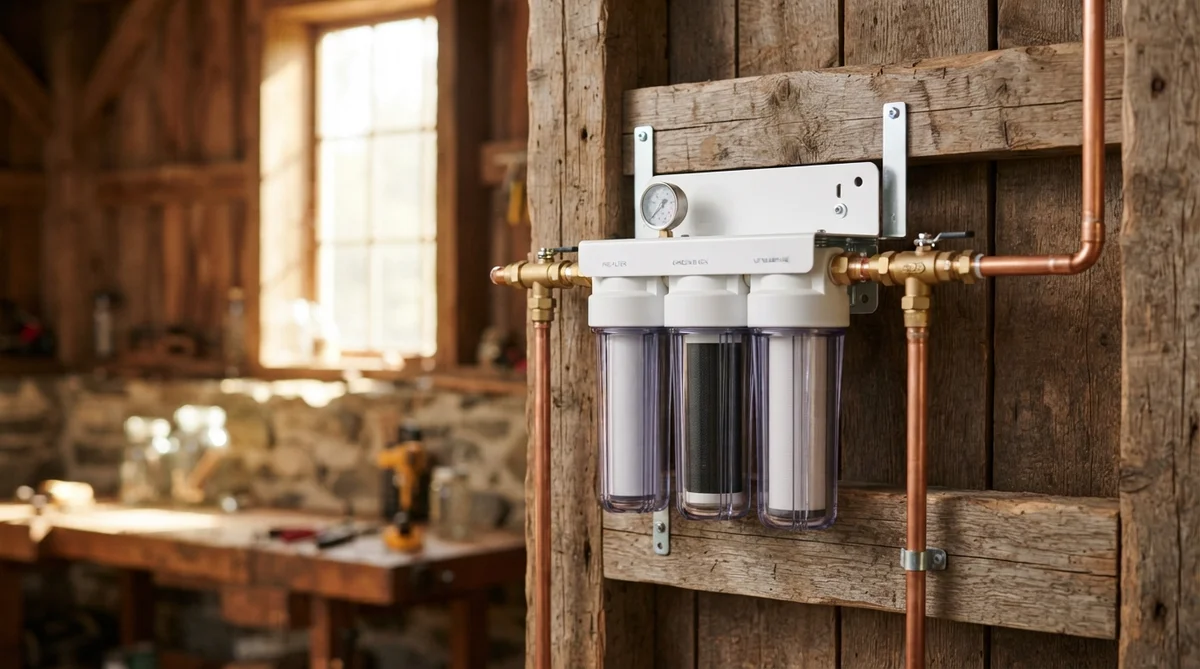
Mechanical cartridge filters remove sand, rust, and suspended solids that plug automatic drinkers. When filtering well water for cattle, installing a dual-stage 50-micron down to 5-micron sediment filter prevents mechanical wear on float valves.
Chemical treatment uses media like activated carbon or manganese greensand to eliminate chlorine odors, iron, and heavy metals. For extreme mineral content or dissolved solids, evaluating how do reverse osmosis systems work helps determine if membrane filtration is viable for high-value stock units.
Dosing Systems and Sanitizing Techniques
Proportional inline injectors meter sanitizers directly into main water lines based on flow rate. Sodium hypochlorite (bleach) or hydrogen peroxide dosing maintains a free chlorine residual of 0.5 to 2.0 ppm, suppressing bacterial growth throughout the piping system.
Ultra-violet (UV) disinfection lamps deliver a minimum dose of 40 mJ/cm² to neutralize viruses and cysts without altering water taste. UV units require upstream sediment filtration below 5 microns to ensure pathogens cannot hide behind suspended particles.
Preventing and Removing Biofilm in Water Lines and Troughs
Biofilm is a complex matrix of bacteria and organic polymer substances that adheres to pipe walls and trough surfaces. It shields pathogens from standard sanitizer concentrations and degrades water taste.
Implement these steps to control biofilm across your water delivery system:
- Shock Chlorination: Flush water lines annually with a chlorine solution of 100 to 200 ppm, allowing 4 to 12 hours of dwell time before thorough flushing.
- Hydrogen Peroxide Treatments: Inject stabilized hydrogen peroxide at 1% to 3% concentration to scrub organic slime without leaving corrosive residues.
- Physical Scouring: Scrub open troughs manually using stiff-bristle brushes and biodegradable soap at least once every quarter.
- Drain and Dry Cycles: Drain unused tanks completely during pasture rotations to desiccate remaining algal mats and microbial colonies.
Best Practices for Safe Water Storage and Handling
Proper placement and design of stock watering stations prevent contamination before it starts. Field experience demonstrates that small layout adjustments dramatically reduce maintenance labor and contamination rates.
Follow these practical engineering guidelines on your property:
- Set Back Drinking Areas: Place troughs at least 45 meters (150 feet) away from feeding areas to prevent feed drop from animals’ mouths into the water.
- Elevate Troughs on Pads: Mount stock tanks on elevated concrete or heavy gravel pads to stop manure and mud accumulation around the rim.
- Install Closed-Ball Systems: Use insulated, enclosed drinkers with floating balls that shield water from direct sun, dust, and wild animals.
- Shade Storage Tanks: Cover poly tanks or install UV-resistant dark storage vessels to block sunlight and stop algae photosynthesis.
How to Test and Monitor Livestock Water Quality
Regular lab analysis establishes a baseline and alerts you to hidden chemical or bacterial shifts. Research from INRAE recommends testing farm water sources at least once per year, or immediately following flooding and major weather changes.
| Parameter | Target Range | Threshold / Action Level | Health Impact if Exceeded |
|---|---|---|---|
| Total Dissolved Solids (TDS) | < 1,000 mg/L | > 3,000 mg/L | Diarrhea, reduced feed intake, mortality in young stock |
| Nitrate-Nitrogen (NO3-N) | < 10 mg/L | > 100 mg/L | Methemoglobinemia (suffocation), poor growth, abortion |
| Fecal Coliforms | 0 CFU/100 mL | > 10 CFU/100 mL | Scours, acute intestinal infections, herd outbreaks |
| Sulfates (SO4) | < 500 mg/L | > 1,000 mg/L | Severe scours, copper deficiency, polioencephalomalacia |
Frequently Asked Questions About Livestock Water Quality
How to keep stock tanks clean without harmful chemicals?
You can maintain tank clarity naturally by installing floating covers, adding barley straw bundles, or introducing gold-standard zinc-anode float valves. Regular manual cleaning with vinegar solutions also keeps algae down without chemical risk.
Can livestock drink water with high iron content?
Iron levels above 0.3 mg/L cause staining and bad taste, while levels exceeding 2.0 mg/L depress water intake and interfere with copper absorption in cattle. Pre-filtration or oxidation systems should be installed for high-iron wells.
How often should livestock water tanks be emptied and cleaned?
Under heavy summer usage, clean stock tanks weekly or bi-weekly. Closed automatic drinkers require monthly inspection and quarterly thorough scrub-downs.
Does water temperature affect how much animals drink?
Yes, livestock prefer water between 10°C and 20°C (50°F to 68°F). Warm water above 27°C (80°F) reduces intake and accelerates bacterial growth.